
Geothermal Library
Legends & Legacy · Research library, search and AI discovery
Decades of research that could only be found by someone who already knew it was there — now a collection anyone can question in plain language.
The Geothermal Library holds more than forty thousand records, much of it scanned material that was never text-searchable. One search now reads the documents themselves rather than their catalog entries, and a built-in assistant answers questions from the same collection — with every claim one click from the source it came from.
An archive is only as good as what people can find in it
A specialist collection accumulates for decades: conference papers, reports, surveys, much of it scanned long before anyone thought about search. The catalog knows a document's title and author. It does not know what is on page 41 — and that is usually what the researcher came for.
Scans that search can't read
Material digitised as images is invisible to a text search. The document is online, and still effectively lost.
Catalog entries, not content
Searching titles and keywords finds the documents someone remembered to describe well, and misses everything else.
Knowledge held by a few people
The people who know where things are become the search engine — and the collection quietly narrows to what they can recall.
A benefit members rarely use
An archive that is hard to search stops being a reason to join. The value is real, but nobody reaches it.
From a question to the page that answers it
Members arrive with a question, not a call number. The platform is built around that: ask in your own words, and end up inside the document that answers you.
Ask in plain language
No syntax to learn and no need to guess the vocabulary a cataloguer used decades ago. Members type the question they actually have.
Search reads the documents
The full text of the collection is searched, scans included — not just the catalog record that sits in front of each one.
Narrow the field
Results are filtered down until what is left is worth reading, rather than scrolling through everything the collection has on a subject.
Land on the passage
Opening a result puts the member at the matching passage inside the document, not at page one of a two-hundred-page scan.
Ask the assistant
For the broader question — what does the literature say on this — the built-in assistant answers from the same collection in plain sentences.
Check it, then keep it
Every claim traces back to the document it came from, one click away, and what is worth keeping gets collected as the member works.
Search, assistant, and the view behind them
Pick a chapter to see the screen behind it. Click any screenshot to open it full size.
Scanned material that was never text-searchable now sits under one search that reads the documents themselves, not just their catalog entries. Members search in plain language, narrow the field, open the matching passage inside the document, and collect what is worth keeping.
What's inside the platform
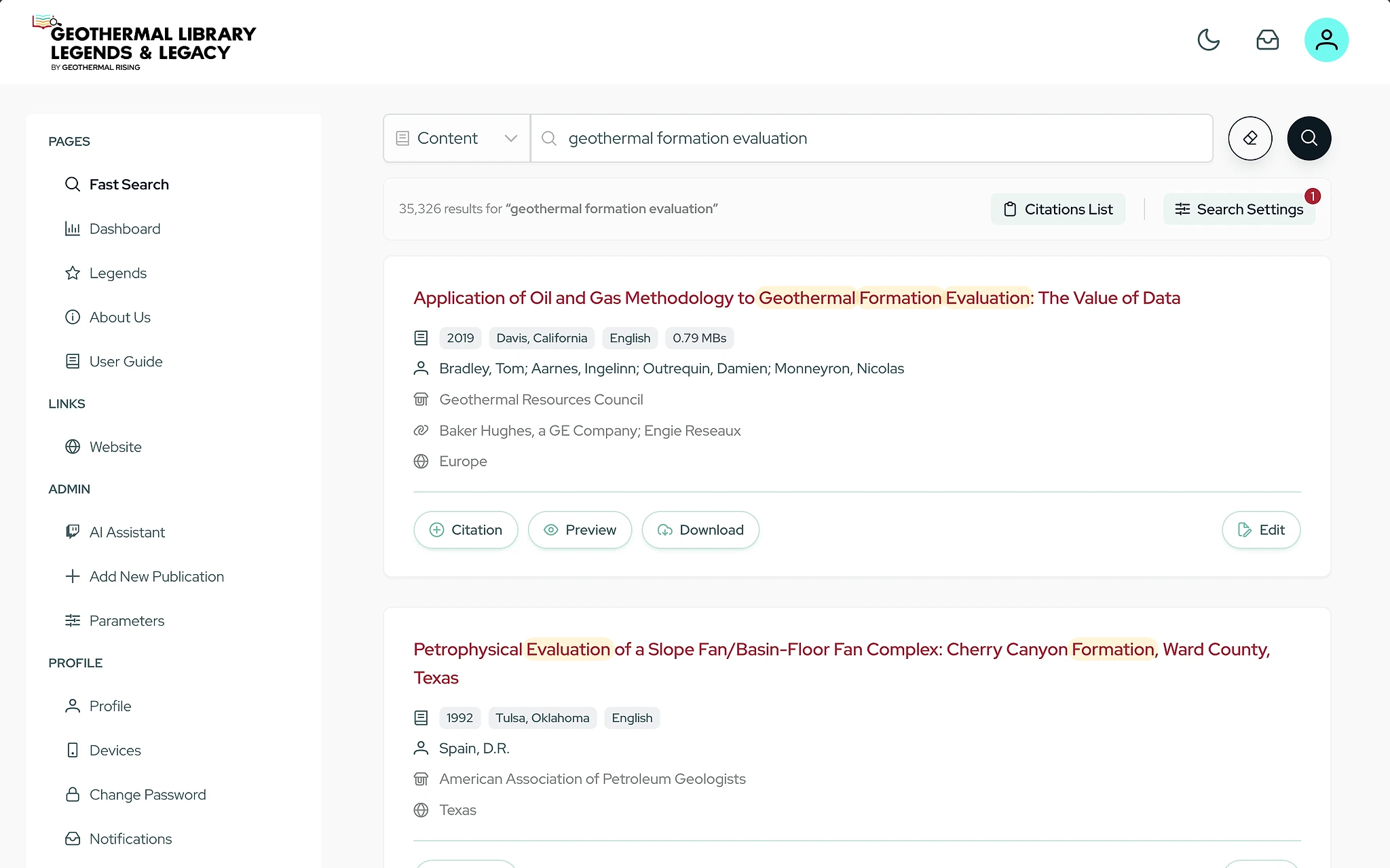
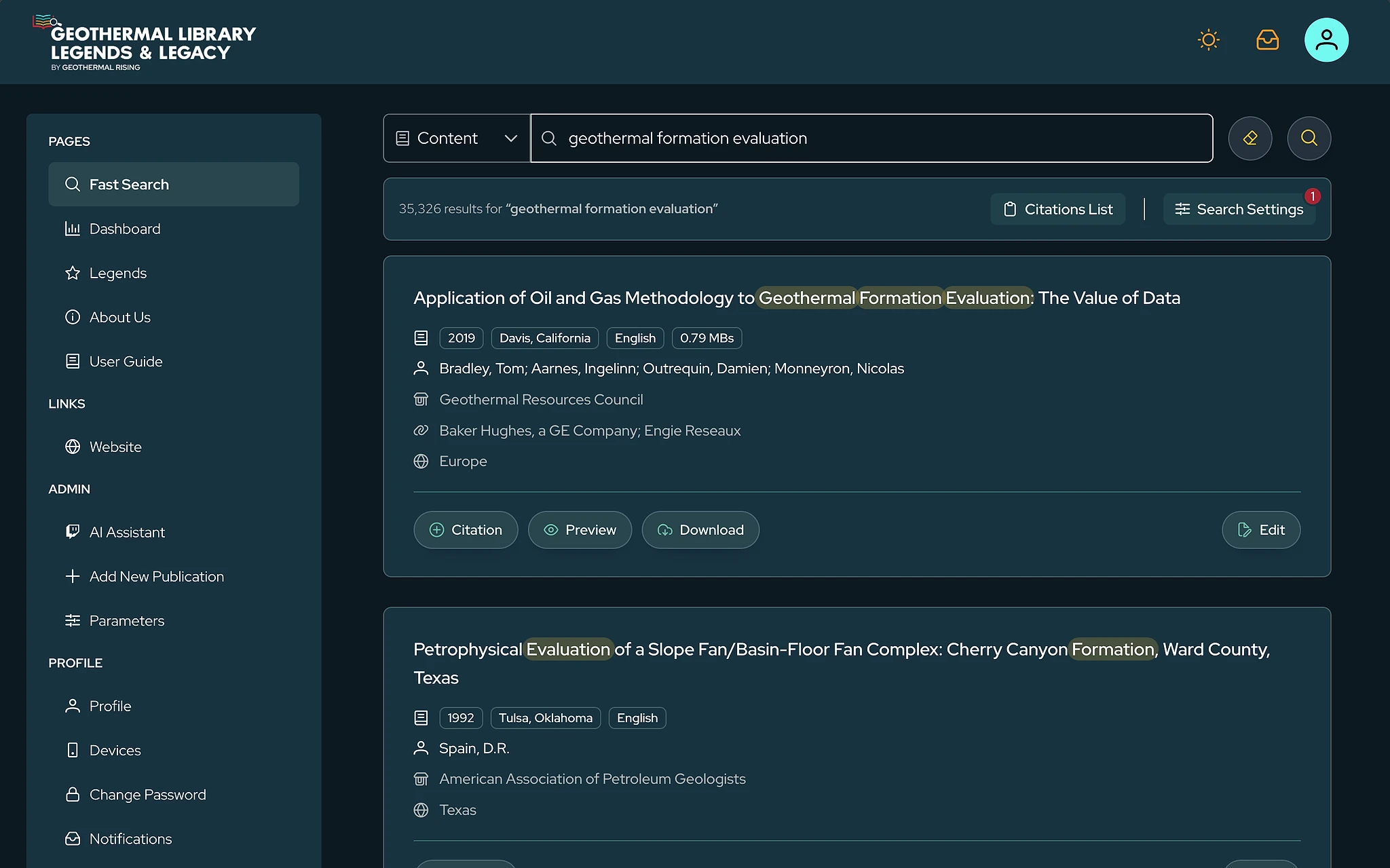
Full-text search across scans
Scanned material that no text search could reach is searched alongside everything else, so the whole collection answers a query rather than the part that happens to be digital text.
Results in well under a second
Searching more than forty thousand records returns in about four-tenths of a second — fast enough that members refine a question instead of abandoning it.
Straight to the matching passage
A result opens the document at the place that matched, which is what turns a long scanned report from an obstacle into a source.
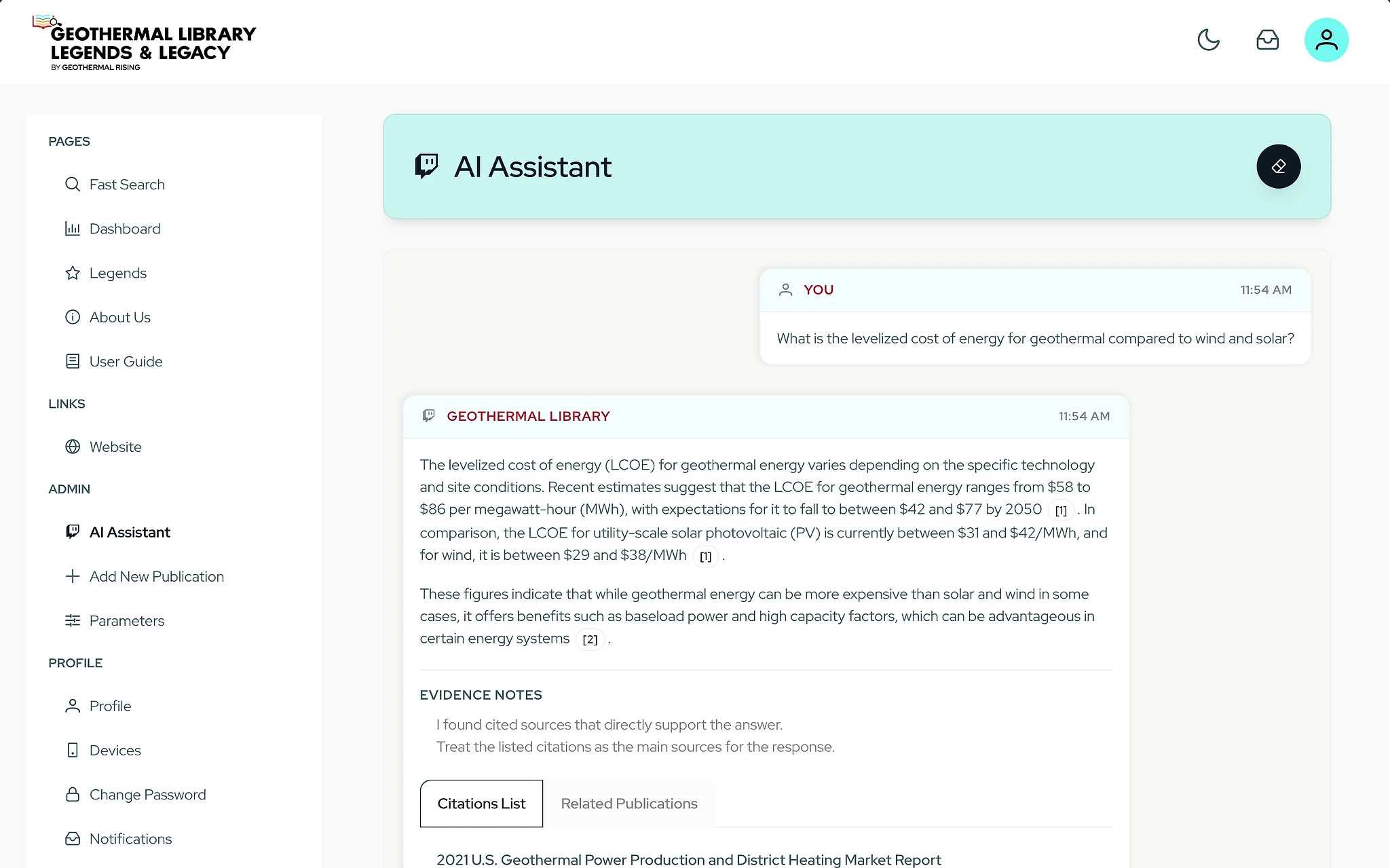
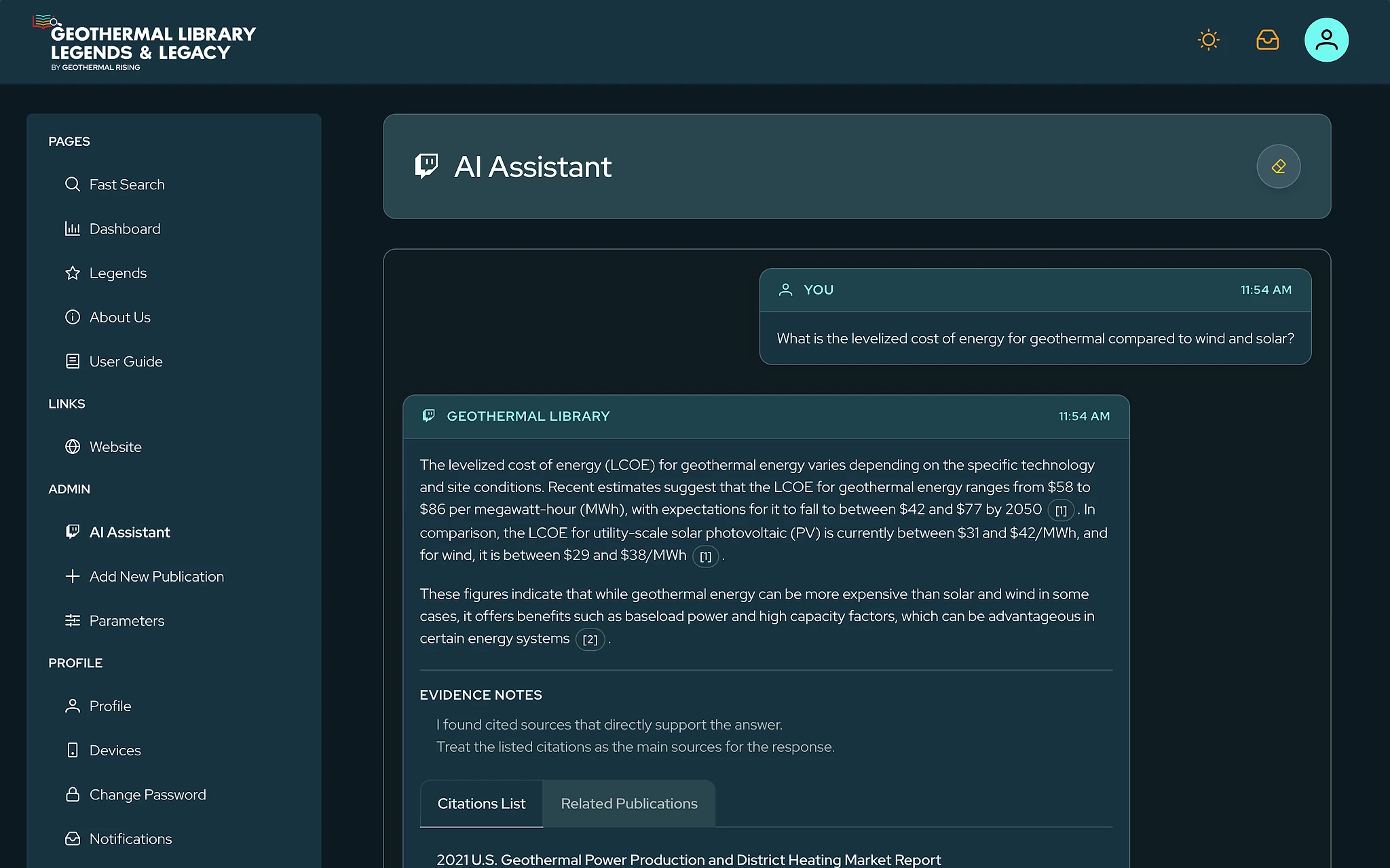
An assistant grounded in the collection
The assistant answers from the library's own documents rather than from the open internet, so what it says reflects the collection the organisation stands behind.
Every claim cited
Each statement traces back to the document it came from, one click away — the difference between an answer a researcher can use and one they have to take on faith.
Recent work when it matters
Asked what the literature says on a topic, the assistant favours recent work where the question calls for it, instead of treating every decade as equally current.
Collect as you work
What is worth keeping gets collected during the search itself, so a session of research ends with something to take away.
Curator operations view
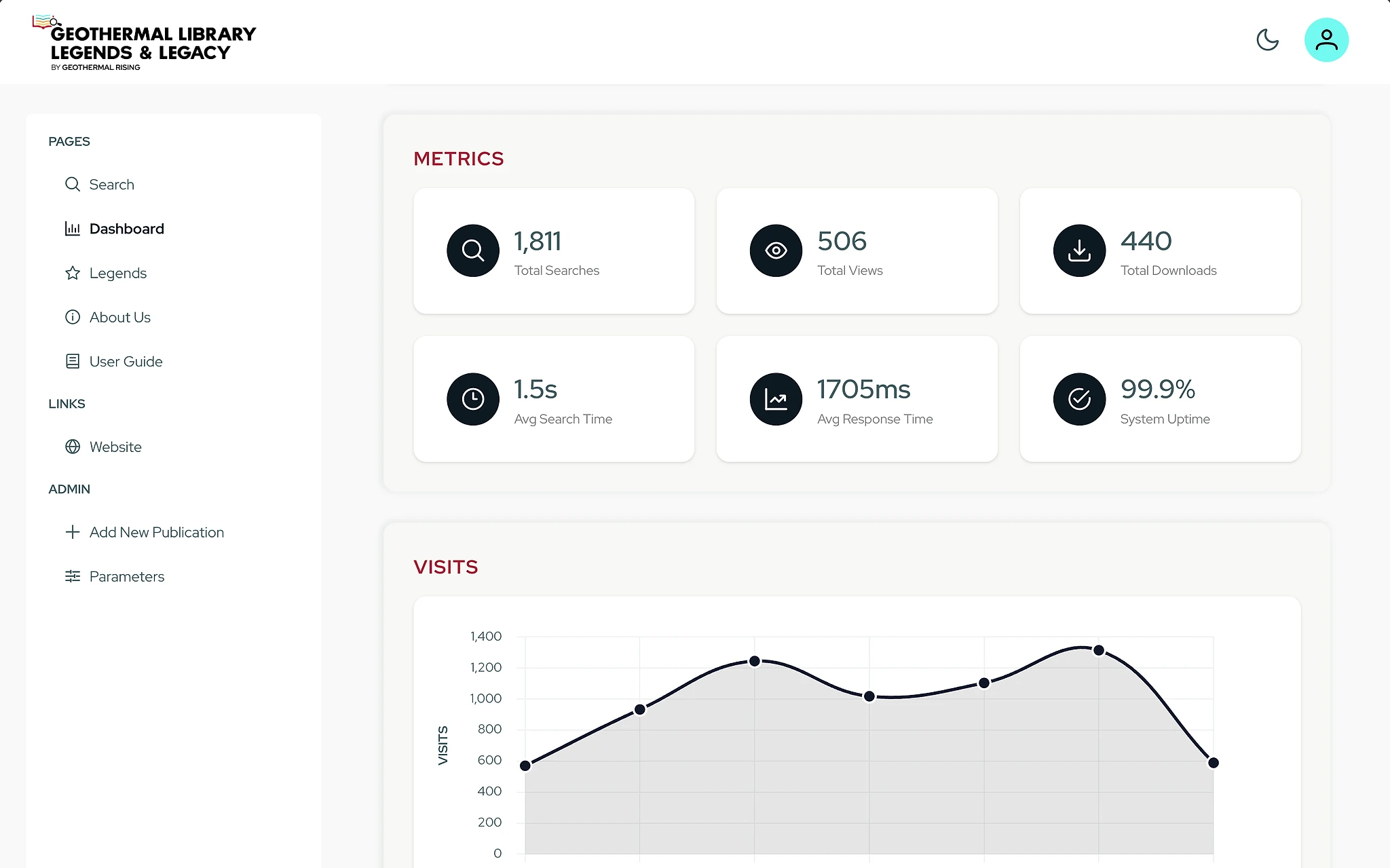
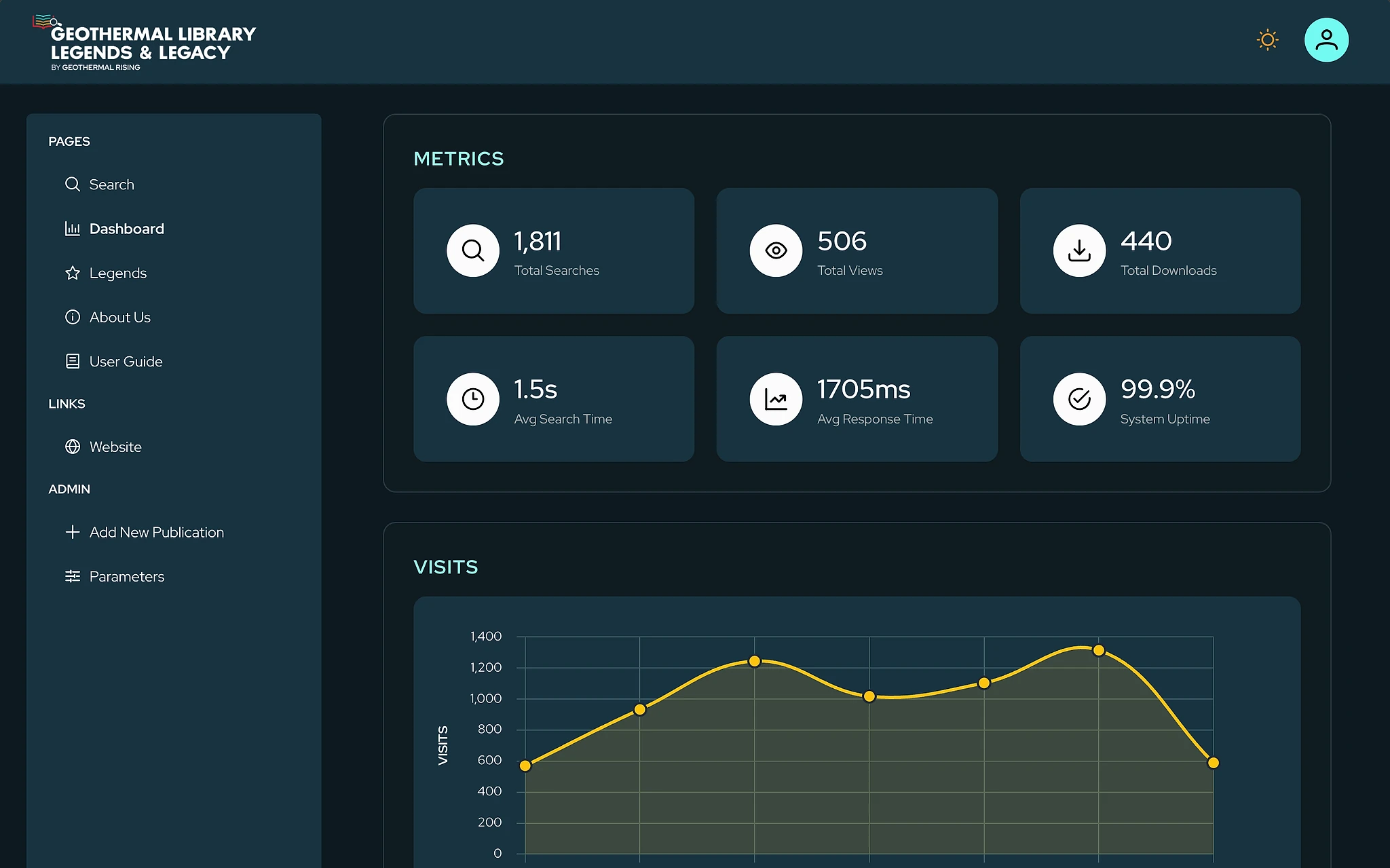
Searches, views and downloads sit beside average search time, response time and uptime, with weekly visits plotted across the period and a ranking of what the community actually opens.
Growing the collection
New material enters from the same menu the curators already work in, so the archive keeps growing without a separate process or a developer.
One collection, four ways in
Researchers — arrive with a question, search the full text of the collection, and land inside the document that answers it.
Newcomers to a subject — ask the assistant what the literature says, read a plain answer, and follow the citations into the primary material.
Librarians and curators — add new material, watch how the collection is used, and see which publications earn their place in it.
The organisation — turns an archive into a membership benefit people use, with the numbers to show searches, views, downloads and uptime.
What changes once the collection is searchable
Decades of scanned material stop being dead weight and start answering questions
The archive becomes a membership benefit people actually reach, not one they are told about
Finding a source takes a question and a few seconds instead of an email to whoever knows the collection
AI answers stay defensible, because every claim shows the document behind it
Curators see what the community opens, and can grow the collection towards it
An international membership gets the same access, at the same speed, wherever they work
The people who commissioned it
Working with Elyntis to revamp our library website and database was an excellent experience. Sarpay and his team were very responsive to our needs and met all deadlines for deliverables. They proposed several options for our project and gave us enough background and data to make informed decisions on the path forward. I highly recommend them!
Every organisation is sitting on documents it can't search
Reports, specifications, contracts, decades of scanned records — the shape of the problem is the same whether the collection is a research archive or a filing system. So is the answer: make the content itself searchable, put an assistant on top of it, and make that assistant show its sources.
Your documents, not the internet
The assistant answers from the material you own and stand behind, which is what makes its answers usable in your field.
Citations as a requirement
We build AI features that show their working. An answer nobody can verify is a liability, not a feature.
Measured from day one
Usage, response time and uptime are part of the product, so you can show what the platform is doing rather than assume it.
See the other platform we built and delivered, or read how we work as an engineering partner.
What is buried in your archive?
Tell us what your collection looks like today, and we'll walk you through the Geothermal Library and what the same approach would mean for it.
Request a walkthrough ← Back to the showcase